Instituto de Investigação e Inovação em Saúde, Universidade do Porto
Rua Alfredo Allen, 208 4200-135 Porto, Portugal
Phone: +351 226 074 900
Email: info@i3s.up.pt

Instituto de Investigação e Inovação em Saúde, Universidade do Porto
Rua Alfredo Allen, 208 4200-135 Porto, Portugal
Phone: +351 226 074 900
Email: info@i3s.up.pt

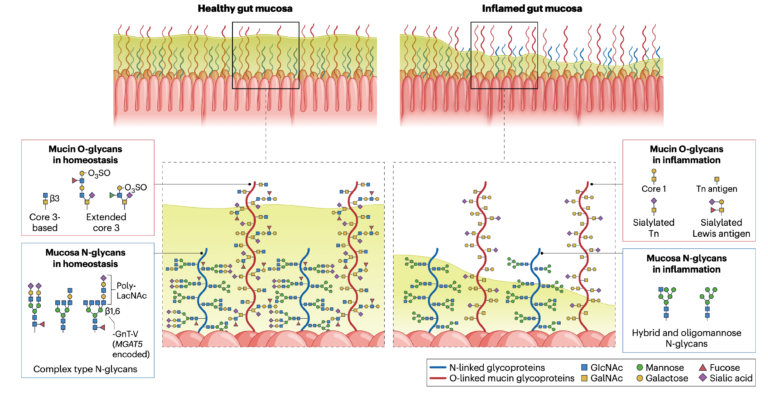
Pinho’s Lab has recently published a landmark review in the journal Nature Reviews Gastroenterology & Hepatology! In collaboration with Joana Torres (Luz Hospital, Lisbon) and Jean-Frederic Colombel (Ichan School of Medicine, Mount Sinai, NYC, USA), this publication delves into how the mucosal glycome encodes a complex layer of biological information that actively contributes to gut homeostasis and disease.
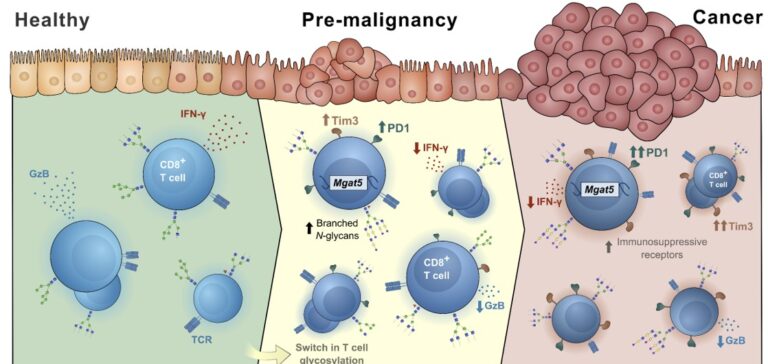
In our most recent publication in Cancer Immunology Research, we describe how T cell glycosylation mediates T cell exhaustion in colorectal cancer and how engineering of the T cell glycome can boost the anti-tumor activity of CD8+ and CAR-T cells.

Pinho’s Lab has recently published a landmark study on colitis-associated colorectal cancer (CAC) in the Journal of Crohn’s and Colitis! Therein, we demonstrate that a progressive increase in N-glycan branching at the T cell surface not only accompanies CAC development but also debilitates T cell function during carcinogenesis.

Our latest publication, published in the journal Gut Microbes, delves into how the glycosylation of the gut mucosa impacts the crosstalk between microbiota and immune cells in the context of inflammatory bowel disease (IBD).
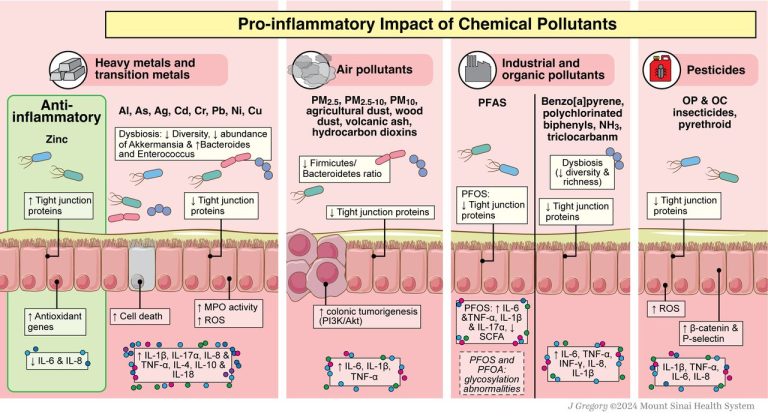
This study, published in the journal Gut, focuses on how environmental pollutants influence the risk of developing inflammatory bowel disease as well as disease outcomes. In total, information from a total of 32 human studies was utilized, allowing for a consolidation of the current knowledge on how escalating pollution levels relate to the increasing incidence of IBD globally.
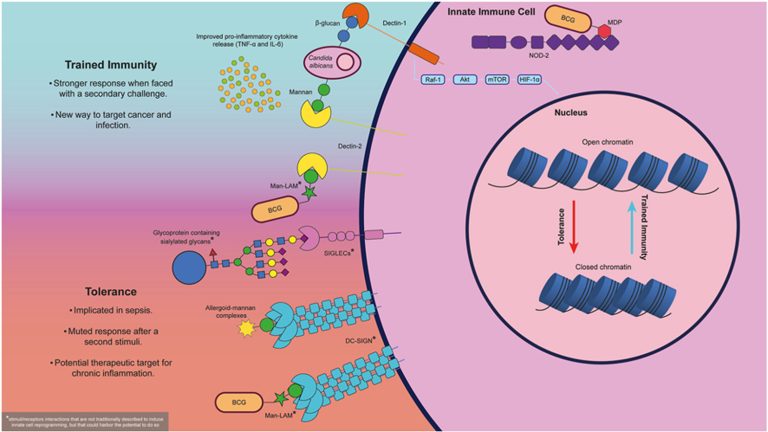
Pinho’s lab has recently published a review article in the journal Carbohydrate Research. Trained immunity is an emerging concept in immunology and in this publication, first authored by Pedro Almeida, we highlight its tenets and delve into how glycans and their interactions with glycan-binding proteins (GBPs) influence key immunoregulatory networks in trained immunity.
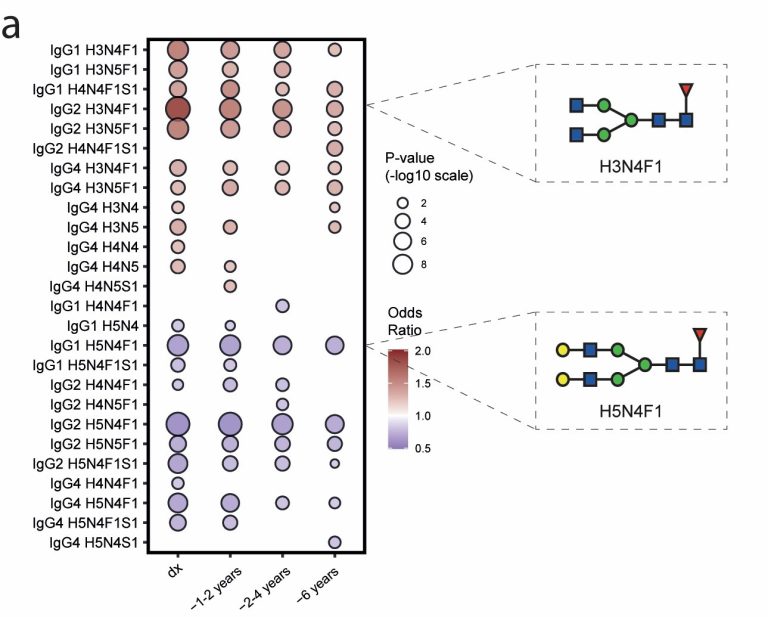
Exciting news! In our most recent publication, we unveil a novel glycan signature in serum IgG antibodies years before the diagnosis of Crohn’s disease. In addition to predating Crohn’s disease and being associated with its complications, we show how this glycan signature elicits pro-inflammatory immune responses and contributes to disease susceptibility.
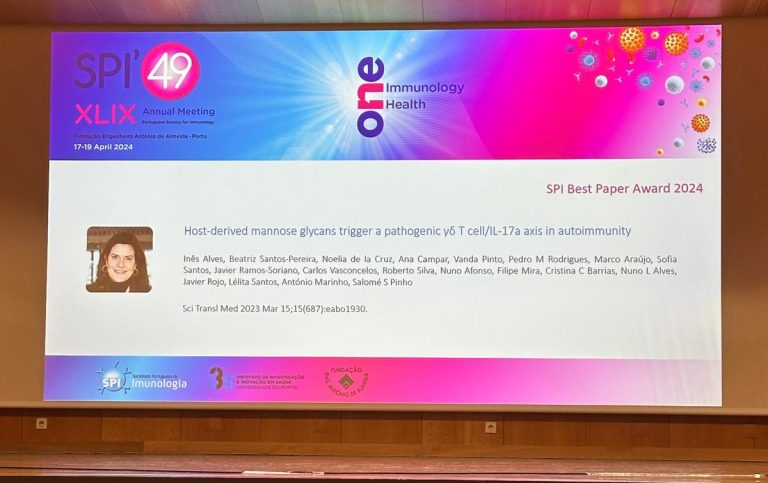
Inês Alves, a researcher in Pinho's Lab, won the Best Paper Award 2023 from the Sociedade Portuguesa de Imunologia (SPI) for her paper titled "Host-derived mannose glycans trigger a pathogenic γδ T cell/IL-17a axis in autoimmunity" published in Science Translational Medicine.
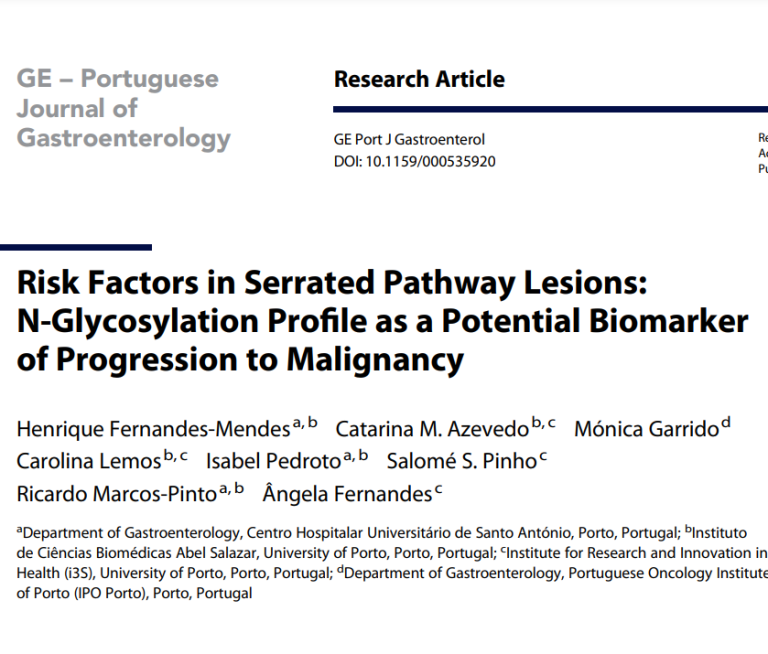
Exciting news! In a significant stride towards understanding colorectal cancer (CRC) progression, a recent study by our research group investigated the intricate role of glycosylation in serrated pathway lesions (SPLs), a specific pathway associated with colorectal cancer development. Published in…
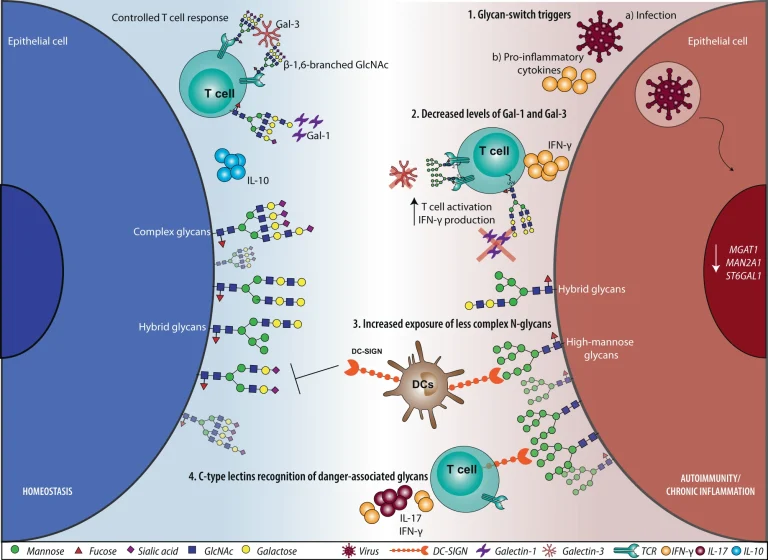
Exciting news! Our recent review paper published in Cellular & Molecular Immunology highlights the vital role of glycans in orchestrating immune responses.